The Audi FIS Ski World Cup Andorra 2026 promotes a program of social, educational, inclusive, and sustainable initiatives.
The organizing committee of the Audi FIS Ski World Cup Andorra 2026 has designed a program of inclusive, educational, and charitable actions linked to the event to involve the entire community and bring the snow and mountains closer to all groups of people. The proposals extend before, during, and after the women’s Alpine Skiing World Cup, which will take place from February 27 to March 1. In this way, the Organizing Committee reinforces its commitment to social responsibility, putting sport at the service of social cohesion, inclusion, and equal opportunities, and generating a positive and lasting impact on the region. The aim is to make accessibility and inclusion the new standards of excellence for all events.
One of the main activities will be organized by the Andorran Red Cross, which will be present at the World Cup Village with an initiative to raise awareness among attendees about the importance of self-protection and first aid in mountain emergency situations. Through the staging of three possible accidents or dangerous situations, participants will have to propose solutions via an interactive game with a final prize. The activity, titled "What would you do?", will be available all three days of the competition. Jordi Ribes, director of the organization, explained: "It is a source of pride to collaborate in an event like the World Cup. It is a great opportunity to bring first aid closer to the public in a simple, practical way designed for everyone."
Collaboration with social organizations and associations in the country doesn’t end here: the Private Foundation Nuestra Señora de Meritxell will also have a space at the World Cup Village where it will organize a charitable activity. As already announced, 25% of the proceeds from tickets to watch the races from the stands will be allocated to ATIDA, the Association of Transplanted and Donors of Andorra.
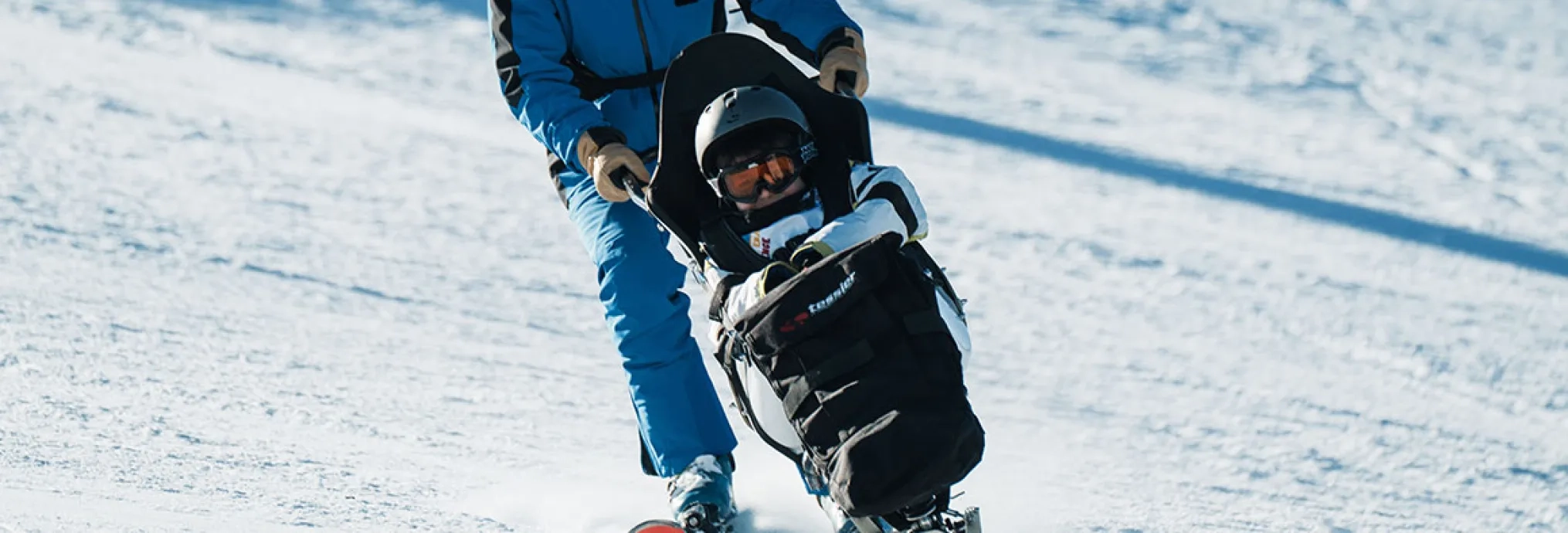
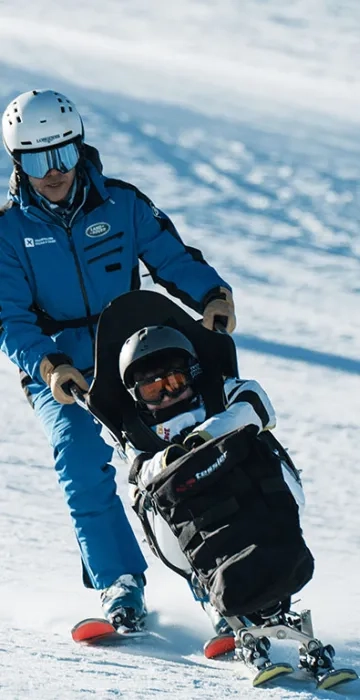
In the preliminary phase, on January 3, there was a special parade of little lights involving children with autism, an initiative carried out in collaboration with the Autism Spectrum Disorder Association of Andorra (AUTEA) and Hi arribarem!, aimed at strengthening the role of sport as a tool for integration. On February 21, days before the start of the competition, Hi arribarem! and Special Olympics will take part in another special parade of lights, a day designed to bring snow closer to children with disabilities and promote the values of equality, accessibility, and coexistence. Once the World Cup is over, on March 25 there will be another day with adapted snow activities, in collaboration with the Inclusive Classroom project, driven by the Government of Andorra.
“From click to the stands”
To involve children and young people in the event, an educational activity was held in the schools of Canillo to introduce the World Cup from a geographical, historical, and sporting perspective, culminating in the live experience of a competition day on Friday, February 27. This year, a group of students from the Andorran Baccalaureate School will also participate in a Participation, Action, and Service (PAS) project aimed at analyzing the user experience of the women’s Alpine Skiing World Cup, to check if the event meets the principles of universal accessibility. The working team will evaluate both digital channels and facilities, through a prior visit and direct observation during the competition days. This analysis will be conducted by accompanying people with reduced mobility or sensory disabilities, among others. The project, titled "From click to the stands", will provide a diagnosis of the accessibility level of the World Cup and collect improvement proposals.
Accessibility is another priority, with the goal that all services and facilities are adapted for everyone, including people with disabilities. Thus, the official World Cup website is digitally accessible and can be customized to the user’s needs. On-site, signage and communication materials include QR codes that provide information in sign language, and there are adapted routes for reaching public areas and an escort service for people with reduced mobility.
Fully decarbonized events
Another value promoted by the Organizing Committee is sustainability and environmental respect. The goal is to ensure that in the near future, competitions become fully decarbonized events. In this regard, during the 2023 World Cup Finals, there was already a 19.4% reduction in relation to the CO2 emissions produced during the 2019 Finals; and in the 2024 World Cup, there was a further 32% decrease compared to 2023, with compensation in nationally-based projects.
To achieve these reductions, it is worth highlighting the use of 100% renewable energy thanks to FEDA’s Green Light certification, as well as all actions to reuse materials and reduce waste, plus measures to increase the efficiency and self-production of renewable energy.
In terms of artificial snow, production is optimized year after year with more efficient snow cannons and responsible water and electricity usage policies, thanks to GPS mapping systems, weather forecasts, and hydrogeological studies. In addition, the World Cup team promotes clean mobility by encouraging public transport, carpooling, and electric vehicles, and highlights local producers. This year, new data collection methods were also introduced to track the journeys of the athletes' teams to calculate the carbon footprint more accurately.
With these initiatives, the World Cup project aims to go beyond the sporting competition and establish itself as an event capable of creating a social legacy that is sustainable for the region.